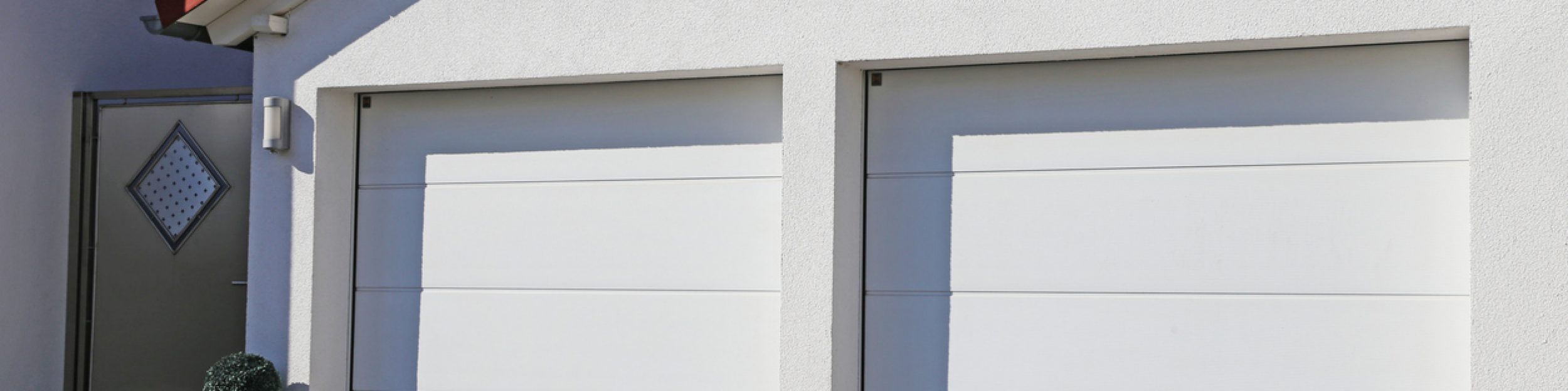
Too many homeowners do not think of securing their garage as an important issue. The house may have a deadbolt and a burglar alarm system, and yet the garage a single padlock. The challenge is that unsecured garage doors are a prime target for break-ins.
Burglars can even access the interior of the house if the garage is connected to the home. Here’s a practical look at which security features really count and what should be at the top of your list when selecting, or improving, your garage door security. The Starting Point: Multi-Point Locking Most garage doors can be opened if they have a single central locking system at the middle latch of the up-and-over door.
With multi-point locking, the door is engaged at several spots around the frame, including the centre, sides, top and bottom. Forcing the door becomes considerably more difficult, and that is why it’s the minimum requirement for all new garage doors. Panel Composition and Thickness The difference between steel doors is in their construction and thickness.
A minimum skin thickness of 0.45mm is recommended for resistance to physical attack, with a preference for 0.5mm and even heavier. Double skinned doors are more difficult to deform and cut than single skinned panels. Several high-security doors have reinforced steel ribs added in the fabrication of the panels to provide extra strength.
Ground Anchors and Anti-Lift Devices Even with multi-point locking systems, some types of doors, especially up-and-over types, are susceptible to bottom lifting when the lock is disengaged. To counter this, anti-lift devices are installed in the door to restrict its motion upward. For high-security situations, ground anchors (which are the bolts that secure the bottom of the door to the concrete floor) offer a greater physical barrier.
Electric Motors as Security Devices While adding convenience, electric motors greatly enhance security. When the motorised door is closed and the motor is on, the drive mechanism makes it impossible to lift the door manually. The top motor units also have a built-in deadbolt that locks the door in its closed position irrespective of the motor.
This means that if someone attempts to pull the motor out by the emergency cord (a common tactic), the deadbolt will be locked. Always clear any windows in the garage that are accessible to the outside. If a thief can reach through a window to engage the emergency release cord, fit a shield over the cord.
Smart Monitoring and Alerts Wi-Fi-enabled garage
The Baseline: Multi-Point Locking
Panel Construction and Thickness
Ground Anchors and Anti-Lift Devices
Electric Motors as Security Devices
Always ensure your garage has no accessible windows through which a thief could use a hooked wire to pull the emergency release cord. Fit a shield over the cord if this is a risk.
Smart Monitoring and Alerts
Wi-Fi-connected garage door openers allow you to monitor your door remotely via a smartphone app. You’ll receive instant notifications whenever the door opens or closes — so any unauthorised operation is flagged immediately. Many systems also allow you to check door status and close it remotely if you’ve left it open.
If you already have a home alarm system, ask your installer about integrating the garage door sensor into it. A door opened without a code or outside set hours can trigger the alarm automatically.
Physical Deterrents
External security lighting triggered by a motion sensor near the garage entrance makes any approach visible and is a well-documented deterrent. A visible CCTV camera covering the driveway and garage door area adds further discouragement. These physical measures, combined with a well-specified door, create a layered security approach that makes your garage a far less attractive target.
The Internal Connecting Door
If your garage connects to the house via an internal door, this door needs its own security specification. In many homes, the internal garage door is a hollow-core panel door with a basic mortice lock — far below the standard of the front door. Replacing it with a solid-core fire door with a multi-point lock significantly reduces the risk of the garage being used as a route into the house.
Security is always about layers. A good door with strong locks, a reliable motor, smart monitoring, and physical deterrents creates a much more credible barrier than any single measure alone. If it’s been a while since you assessed your garage security, now is a good time to take stock.