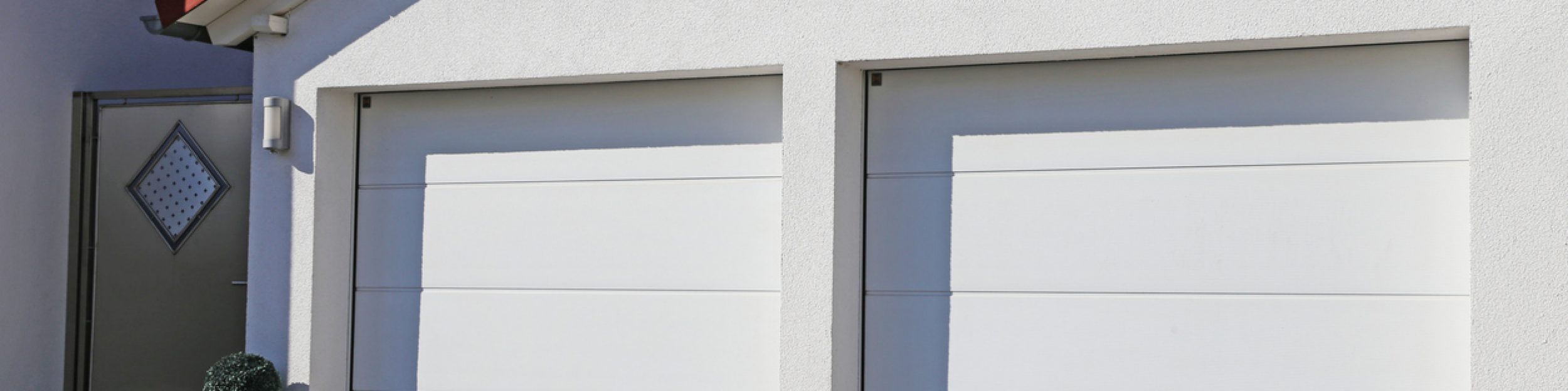
When it comes to trackless doors, insulation isn’t typically the first thing people ask about. Most of the early questions tend to be about how trackless doors actually function, the specific dimensions, and of course the price. All this makes sense. But after these questions are answered, insulation seems to become one of the more important components. Thermal performance tends to be a concern that buyers overlook. That is until the find themselves in a cold workshop that loses heat every winter.
Trackless sectional doors can be insulated, and this is good news for potential buyers. Understanding what it means to have an insulated manufacturer door quoted to you can be trick so some more questions on your part may be required.
How Insulation Works in the Panels
All sectional doors, insulated or otherwise, have horizontal panels. This is the case, whether the doors are trackless or traditional ones that run on tracks. In insulated doors, these panels are made up of a foam core, which is typically made of polyurethane, that is bonded to two skins made of steel. In this case, polyurethane performs well because it bonds to the steel during manufacture, adds some structural integrity to the panel, and provides good thermal performance without the need for extensively thick panels.
The thermal performance of a construction material is expressed as its U-value. The lower the U-value, the better the material is at resisting heat transfer. Uninsulated steel doors typically have U-values between 5 and 6 W/m2K. Typically, insulated sectional doors have U-values between 1 and 1.4 W/m2K, but they can be a bit lower. For temperature-controlled environments, that difference is significant.
Will removing the tracks change anything?
The construction of the panels will remain the same. You can specify a foam-filled insulated panel in a trackless system just like you would in a conventional tracked one. However, the sealing system will be different; this is where the greatest attention will be needed.
Standard side-tracked doors provide some degree of edge sealing due to the track’s presence. This is not the case in trackless doors. The perimeter seal is required to perform at a much higher standard; in low-quality trackless doors the perimeter seal performs at a lower standard. High-quality trackless doors will include brush seals, as well as rubber compression gaskets around the perimeter. Make sure you check the details to avoid unpleasant surprises.
The other one is the floor seal. A good astragal seal along the bottom edge makes a real difference to thermal performance, particularly in older buildings where the floor isn’t dead level. A 5mm gap at the base of a door, for example, undoes a lot of what the panel spec achieves.
Where it makes sense
The most obvious one is cold storage. But it’s not the only one. Vehicle workshops operating two shifts in winter, food preparation units, storage of pharmaceuticals — all these have insulation for obvious reasons and thermal performance for operational preference and the other because of regulations.
Condensation should also be consider and often it isn’t. A warm interior and cold uninsulated steel door will produce moisture and in a workshop environment that creates problems over time — for the door, for any equipment nearby, for the building. Insulation reduces that risk.
What do you actually ask for
Most conversations start at panel U-value, but it’s not the number that you really need to worry about. The installed U-value, which includes the frame, the seals, and thermal bridging through fixings and edges, is the more truthful number. Ask for that as most supplier will have it.
Panel thickness generally runs between 40mm and 80mm. Thicker generally means better performance, though returns diminish after a point. There’s also the question of weight, a heavier panel puts more load on the operating mechanism, so the two specs need to work together.